Process Structure
The organizational framework that enables efficient sandwich delivery operations through systematic coordination of preparation, quality control, and logistics.
Important Notice
This website is an independent informational resource and is not affiliated with food providers or delivery services. This website does not provide ordering, delivery, or payment services.
Understanding System Organization
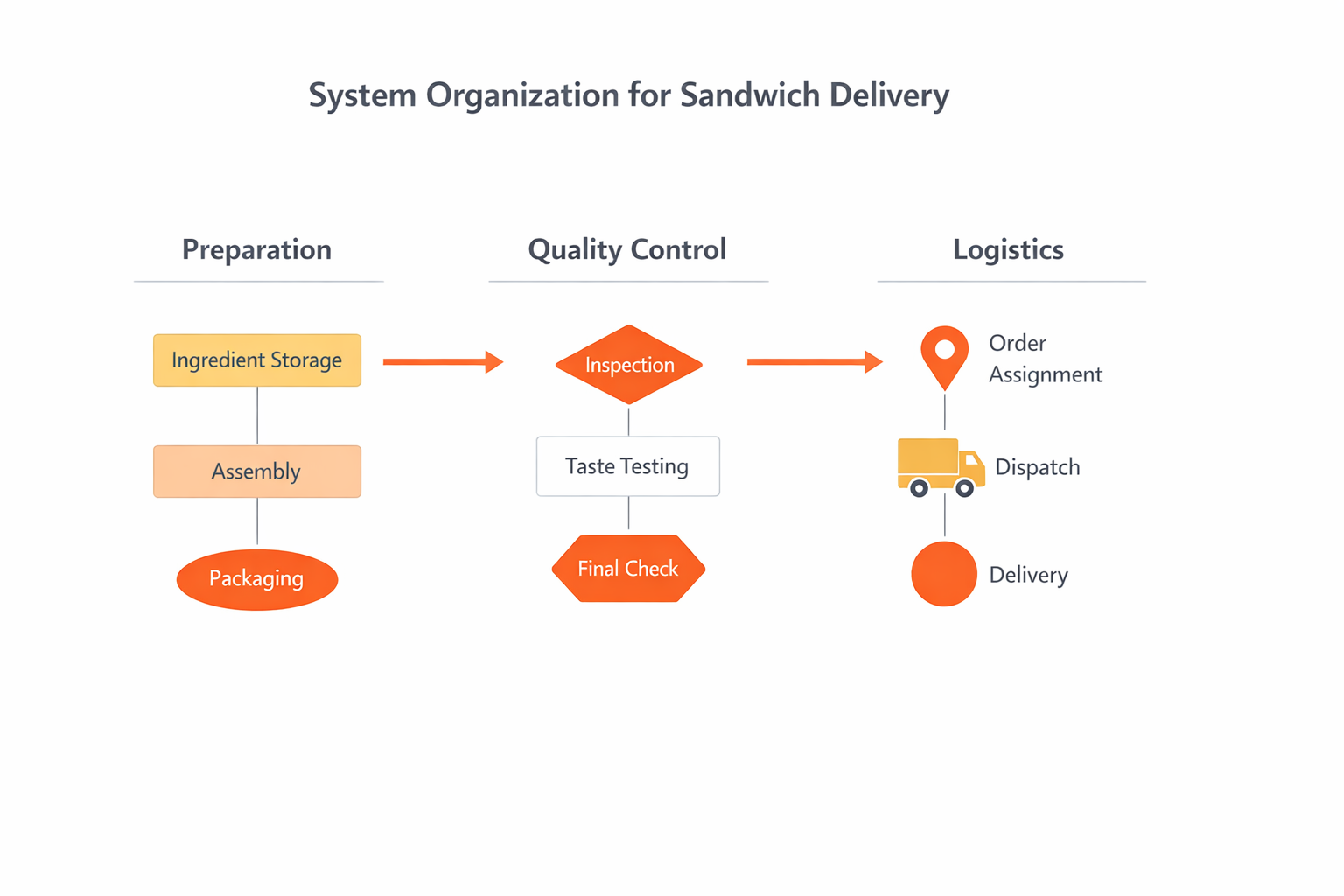
Effective sandwich delivery systems operate through structured organizational frameworks that divide responsibilities among specialized departments. This systematic approach ensures that each aspect of the delivery process receives appropriate attention and expertise.
The system organization typically follows a linear progression from preparation to delivery, with quality control integrated throughout the entire process. This structure allows for clear accountability and efficient communication between different functional areas.
Organizational clarity is essential for maintaining consistent service standards. When each department understands its role within the broader system, operations flow more smoothly and potential issues can be identified and addressed promptly.
Core Components of System Organization
The preparation department serves as the foundation of the delivery system. This department is responsible for all sandwich assembly activities, ingredient management, and adherence to standardized recipes. Preparation teams work within controlled environments to ensure consistent quality and efficient production workflows.
Key functions include inventory management, ingredient preparation, assembly line coordination, and temperature control protocols. The preparation department operates on strict schedules to align with delivery timing requirements.
Quality control functions as an integrated layer throughout the entire delivery structure. Rather than operating as a separate stage, quality assurance protocols are embedded at multiple checkpoints in the process. This approach allows for real-time monitoring and immediate correction of any deviations from established standards.
Quality control measures include visual inspections, temperature verification, packaging integrity checks, and documentation of all quality metrics. These systematic checks ensure that each sandwich meets organizational standards before proceeding to the next stage.
The logistics department manages the movement of completed orders from preparation to final delivery. This function involves complex coordination of dispatch schedules, route planning, delivery vehicle management, and timing optimization. Logistics coordinators work closely with preparation teams to ensure smooth handoffs.
Advanced logistics systems utilize scheduling software and real-time communication tools to maintain optimal efficiency. The logistics department also handles contingency planning for unexpected situations such as weather conditions or traffic delays.
Interdepartmental Communication
Successful system organization depends on effective communication between departments. Clear communication channels ensure that information flows smoothly throughout the organization, enabling rapid response to changing conditions and maintaining operational continuity.
Communication protocols typically include standardized handoff procedures, real-time status updates, and scheduled coordination meetings. These formal communication structures help prevent misunderstandings and ensure that all departments remain aligned with organizational objectives.
Technology plays an increasingly important role in facilitating interdepartmental communication. Digital communication systems allow for instant information sharing, status tracking, and collaborative problem-solving across different functional areas.
Standard Operating Procedures
Standard operating procedures (SOPs) form the backbone of organized delivery systems. These documented protocols provide clear instructions for each task and process, ensuring consistency regardless of personnel changes or varying circumstances.
Well-designed SOPs include step-by-step instructions, quality standards, safety requirements, and troubleshooting guidelines. They serve as training resources for new team members and reference materials for experienced staff. Regular updates to SOPs ensure that processes remain current with best practices and regulatory requirements.
The implementation of SOPs helps reduce errors, improve efficiency, and maintain service quality across all operational areas. By standardizing processes, organizations can achieve predictable outcomes and measurable performance improvements.
Scalability and Adaptability
Organized delivery systems must be designed with both scalability and adaptability in mind. Scalability refers to the ability to handle increased volume without compromising quality or efficiency. Adaptability enables the system to respond to changing conditions, new requirements, or unexpected challenges.
Modular organizational structures allow for easier scaling by enabling departments to expand or contract based on demand. This approach maintains efficiency while providing flexibility to accommodate fluctuating order volumes.
Regular performance analysis and process review cycles help identify opportunities for improvement and adaptation. Organizations that continuously evaluate and refine their systems are better positioned to maintain competitive advantage and operational excellence.